Admin Dashboards • Miami
Custom Admin Dashboard Development — Built for Miami Enterprises
Design and build secure, performant admin dashboards tailored to your operational workflows. We deliver role-based interfaces, data integrations, and real-time visualizations that scale with your business.
Estimate Your Idea Now
Your idea stays confidential · NDA available
Service Overview
Why build a custom admin dashboard?
A custom admin dashboard centralizes operational control, reduces cognitive load, and accelerates decision-making by presenting the right data to the right roles. Off-the-shelf tools often constrain workflows, integration patterns, and security models.
We engineer dashboards with a focus on data integrity, performant front-end rendering, and modular back-end services to support complex permissioning, audit trails, and multi-source aggregation. Typical implementations connect databases, analytics platforms, third-party APIs, and enterprise systems.
Our Miami-based engineering team collaborates with product owners, operations, and security stakeholders to convert requirements into interactive prototypes, production-ready interfaces, and maintainable codebases that align with your technology stack and compliance needs.
What we build
Capabilities for enterprise admin dashboards
Custom UX & Role-Based Interfaces
Design and implement task-focused interfaces and customizable views for admins, managers, and analysts. Support granular access controls and progressive disclosure to reduce user error.
Real-Time Data Visualization
Implement streaming and near-real-time charts, tables, and alerts using efficient data pipelines and client-side rendering strategies to surface critical KPIs without performance trade-offs.
Systems Integration & ETL
Integrate CRM, ERP, databases, and external APIs through secure connectors and ETL processes. Normalize data models to support unified reporting and operational workflows.
Scalable Backend Architecture
Build microservices or modular APIs with caching, pagination, and batching to ensure predictable performance under load and to simplify future feature rollout.
Security, Audit & Compliance
Implement authentication, authorization, encryption at rest and in transit, audit logging, and session controls aligned to enterprise security practices and your compliance requirements.
Maintenance & Operational Support
Provide deployment pipelines, monitoring, incident response processes, and scheduled updates to keep dashboards resilient and up-to-date with evolving data sources.
Data Access Optimization
Apply indexing, materialized views, cache layers, and query optimization to deliver fast queries for high-cardinality datasets and large time-series.
Exporting & Workflow Automation
Enable data exports, scheduled reports, and automated workflows that trigger actions across systems based on dashboard events and rule conditions.
Common challenges
Problems we solve
Clients engage us when existing tools fail to deliver required visibility, performance, or integration fidelity. We address gaps across data consistency, user experience, scalability, and security.
Delivery approach
Our development process
Discovery & Requirements
Workshops with stakeholders to map user roles, key metrics, data sources, SLAs, and compliance constraints. Produce a prioritized requirements backlog and system architecture options.
Prototyping & Interaction Design
Rapid prototypes and clickable mockups for validation with end users. Iterate on information architecture, filters, drilldowns, and alerting behavior before committing to implementation.
Implementation & Integration
Develop front-end components, back-end services, and integration connectors. Implement authentication, RBAC, data pipelines, and performance optimizations following agreed architecture.
Testing & Validation
Execute functional, load, security, and integration testing. Validate data accuracy, UI behavior across roles, and failover scenarios. Address findings in short remediation cycles.
Deployment & Handover
Deploy to production with CI/CD pipelines, monitoring, and rollback plans. Provide operational runbooks, documentation, and training for administrators and power users.
Miami engineering
Local presence, enterprise capability
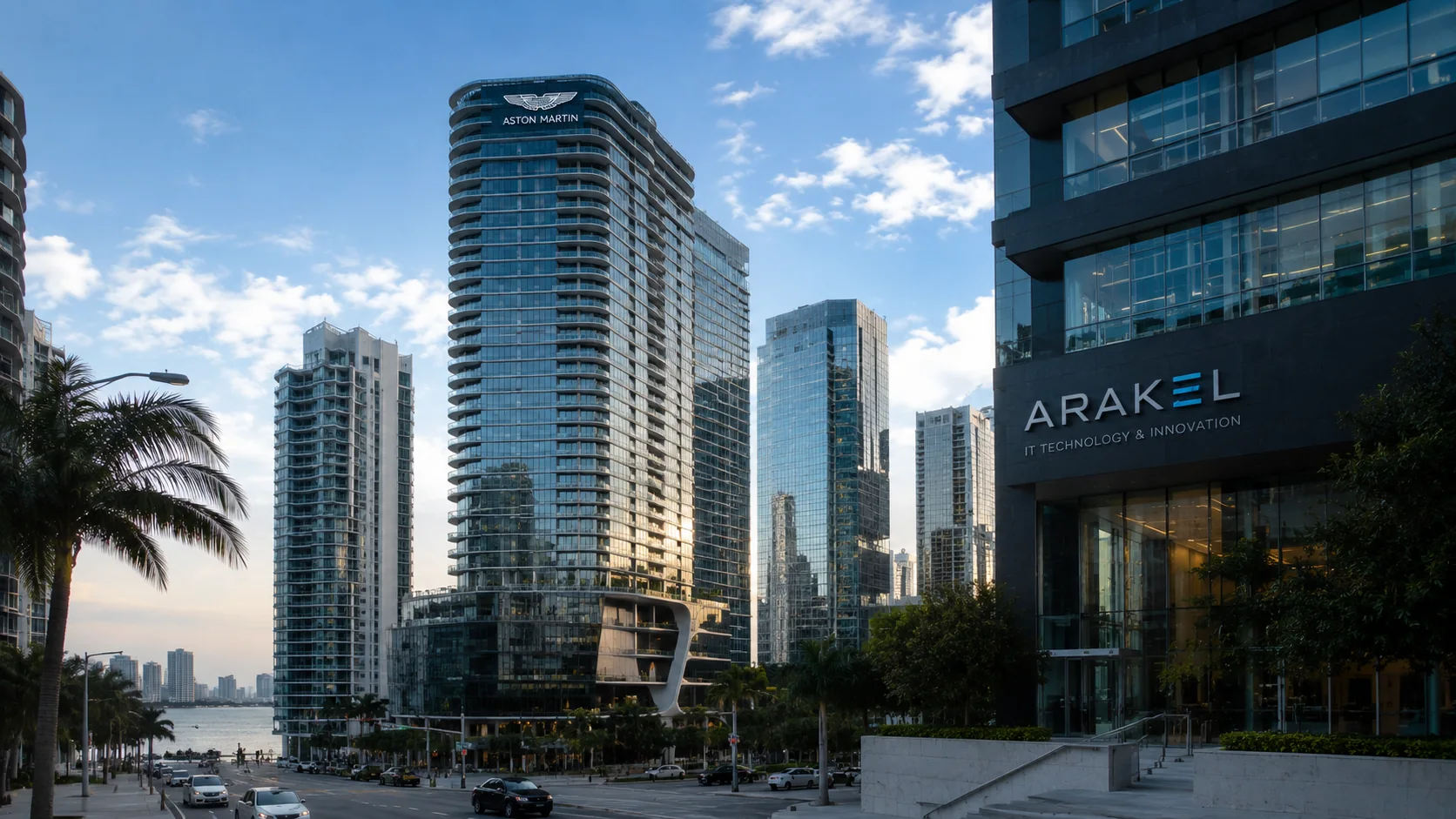
Arakel Holdings provides engineering and product teams available for in-person collaboration or remote delivery aligned to Miami business hours. We combine local engagement with distributed technical expertise to match project scale and timelines.
Our approach emphasizes clear communication, sprint-based delivery, and governance models that integrate with your IT and security functions. We adapt to your deployment preferences — cloud, hybrid, or on-premises — and can coordinate with your internal teams or third-party vendors.
For organizations headquartered or operating in South Florida, on-site workshops and stakeholder sessions can accelerate alignment during discovery, design validation, and launch phases.
Questions businesses ask
Frequently asked questions
What is the typical timeline to deliver an admin dashboard?
Timelines vary with complexity. A scoped dashboard MVP connecting a few data sources and core views can be delivered in 6–12 weeks. More complex systems with multiple integrations, RBAC, and high performance requirements typically require a phased program spanning several months.
Which technology stacks do you use for dashboards?
We select stacks based on requirements. Common front-end frameworks include React and Vue with component libraries for data visualization. Back-end choices include Node.js, Python, or Go for APIs and microservices. Data storage and analytics depend on scale and query patterns and may include relational databases, columnar stores, or time-series systems.
How do you handle data security and access control?
We implement authentication via industry-standard identity providers, enforce RBAC/ABAC, encrypt data in transit and at rest, and integrate audit logging. Security controls are defined during discovery and aligned with your internal policies.
Can you integrate dashboards with our CRM, ERP, or legacy databases?
Yes. We build connectors and middleware to extract, transform, and normalize data from CRMs, ERPs, and legacy systems. We factor in rate limits, batch windows, and error handling into integration designs.
Do you provide ongoing maintenance and monitoring?
We offer maintenance plans that include monitoring, incident response, periodic updates, and roadmap support. Handover includes runbooks and documentation to support your internal teams.
How do you ensure data accuracy and consistency?
We establish canonical data models, implement validation checks, reconciliation jobs, and clear provenance for computed metrics. Testing plans include data-validation scenarios to catch discrepancies early.
What pricing model do you use?
We offer project-based engagements for defined scopes and retainer or managed-service models for ongoing development and support. Pricing is determined after requirements, scope, and non-functional needs are defined.
Can the dashboard support international or multi-tenant organizations?
Yes. We design for multi-tenancy and internationalization when required, separating tenant data stores and applying localization practices for UI text, date/time, and number formatting.
Get started
Build a reliable admin dashboard for Miami operations
We partner with product, operations, and engineering teams to deliver robust admin dashboards that improve visibility and control. Start with a technical discovery to define data flows, user roles, and performance targets.
Analyze My ProjectSchedule a discovery workshop; provide example data sources and user stories; identify compliance or hosting constraints.